Blog
Automation playbooks for D2C operators.
What the manual version of a process actually costs, what a real build looks like end to end, and the sourced numbers behind the case for automating it. Category by category, starting with the one almost every brand already half has.
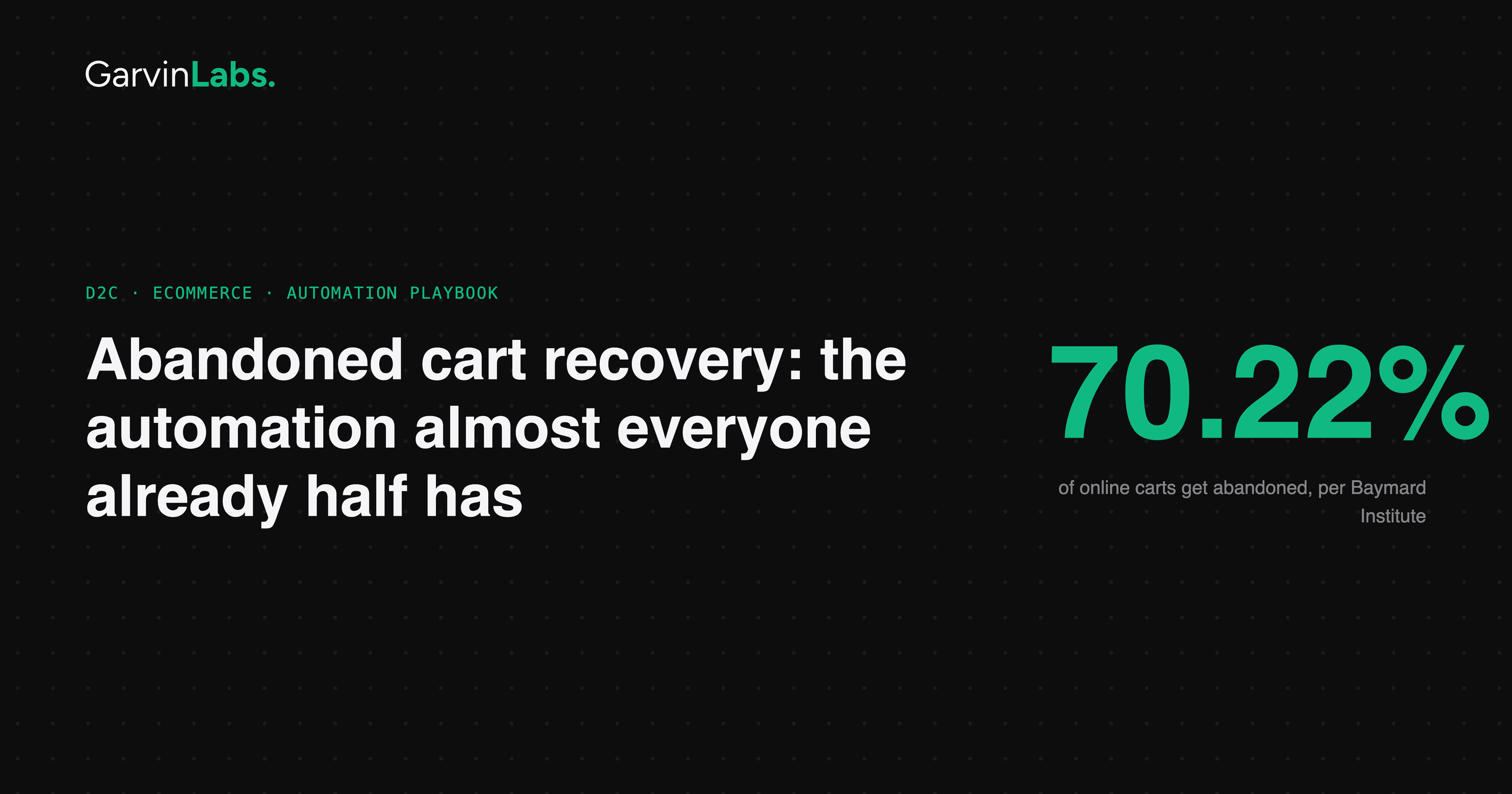
D2C · Ecommerce · Automation Playbook
Abandoned cart recovery: the automation almost everyone already half has
70.22% of online carts get abandoned (Baymard). Most brands already have a default recovery flow running, untouched, tuned for nobody in particular. Here's the gap between that and a well-built one.
Read →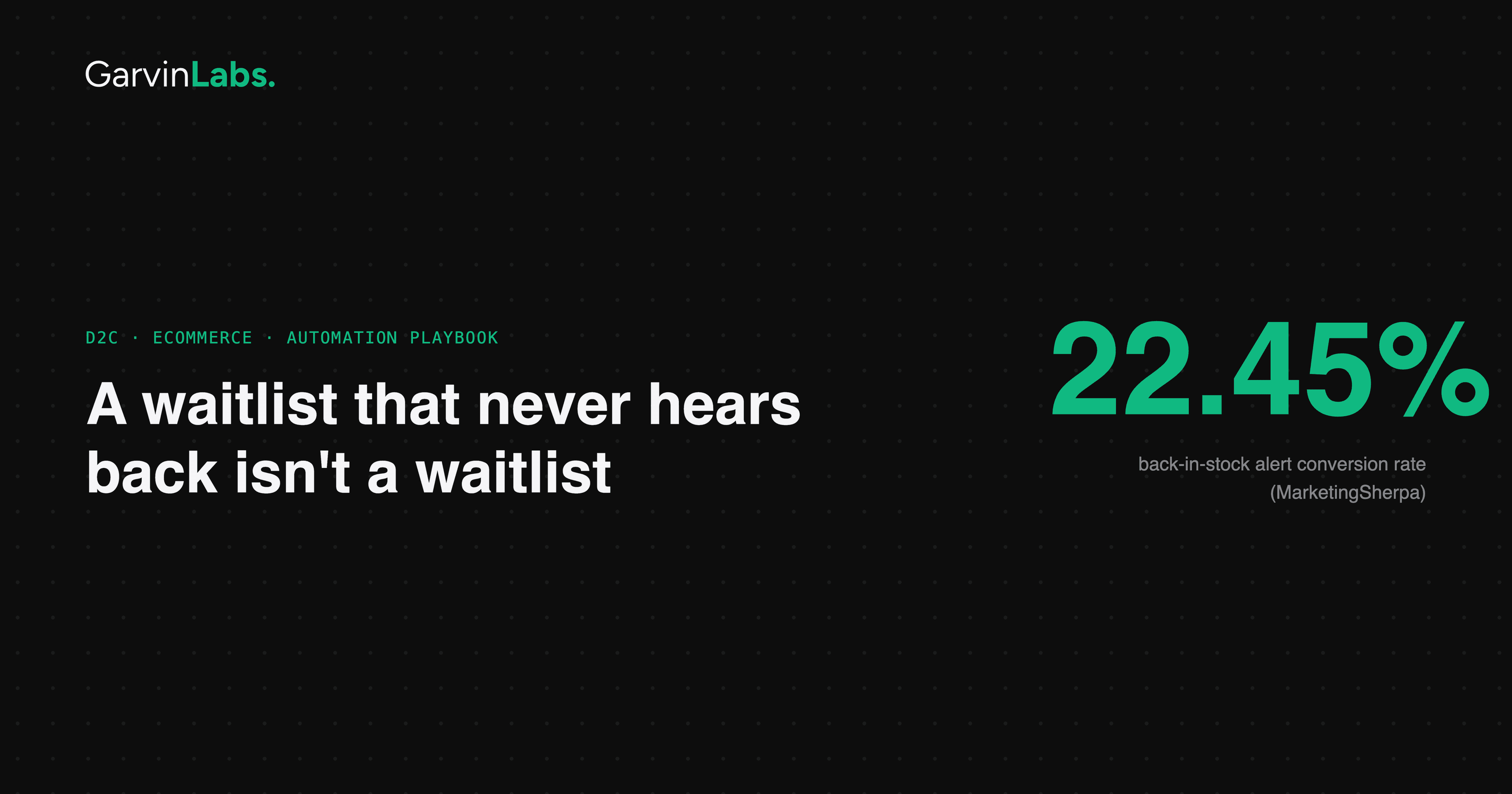
D2C · Ecommerce · Automation Playbook
A waitlist that never hears back isn't a waitlist
A batch restock email misses the customers who mattered most: the ones who wanted one specific variant. What a delivery-triggered, variant-level alert looks like, and the one sourced number behind it.
Read →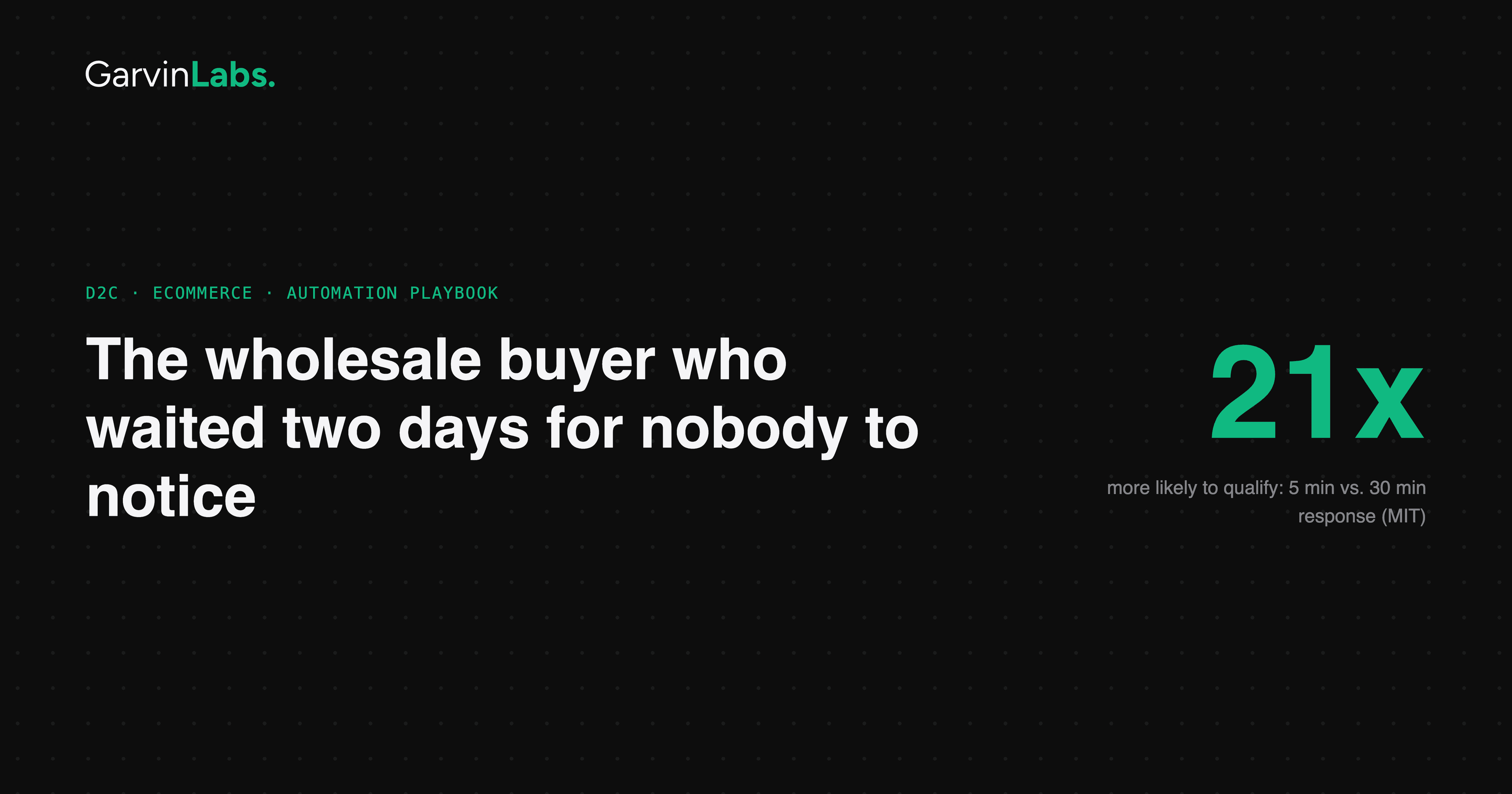
D2C · Ecommerce · Automation Playbook
The wholesale buyer who waited two days for nobody to notice
A fifty-chair order lands through the normal consumer checkout and sits in the queue, indistinguishable from every single-item purchase. What real-time order-size detection and routing looks like.
Read →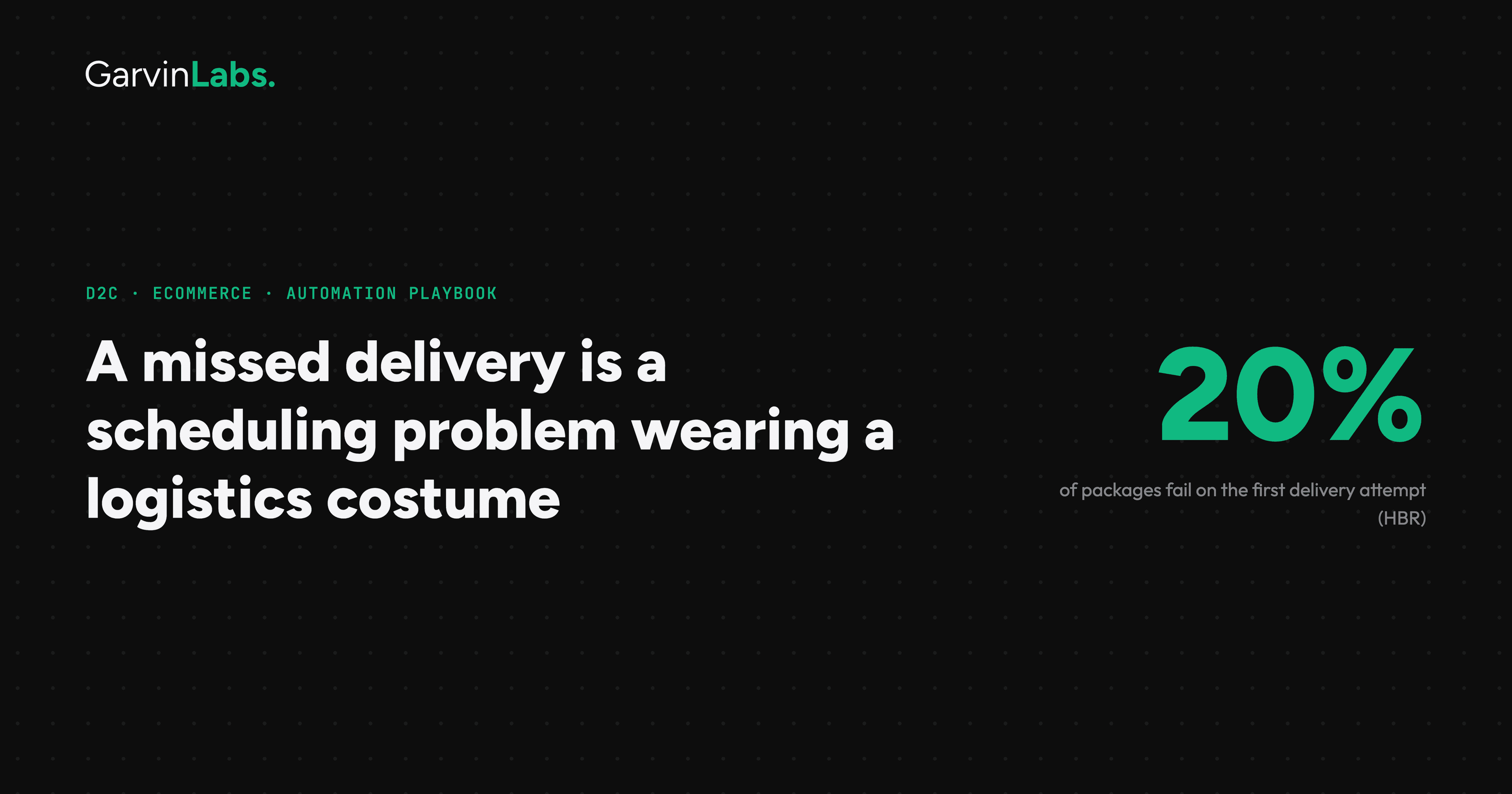
D2C · Ecommerce · Automation Playbook
A missed delivery is a scheduling problem wearing a logistics costume
Bulky items need someone home to receive them, which makes delivery scheduling a phone-tag problem most brands still solve with people. What a self-service scheduling flow looks like.
Read →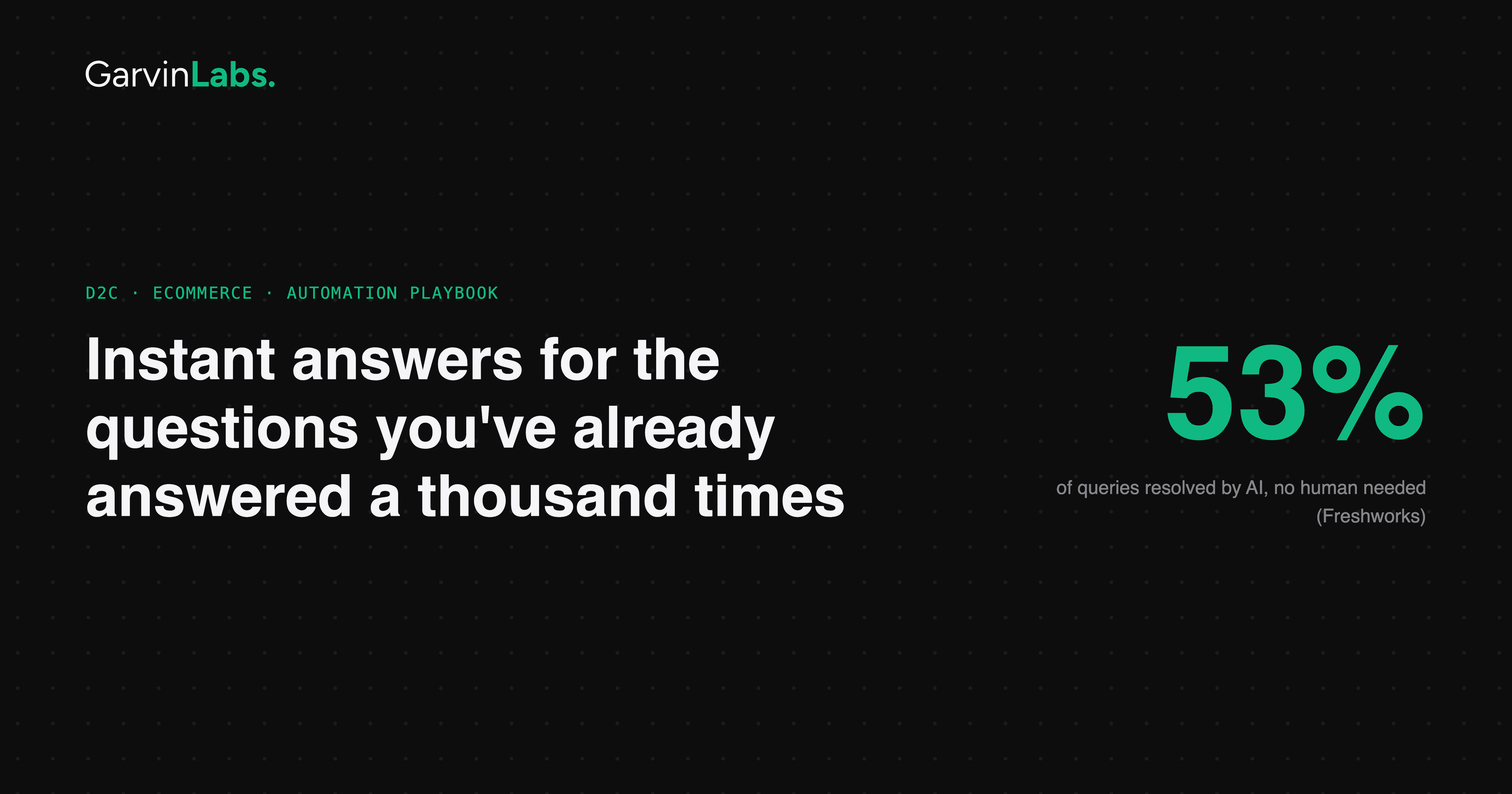
D2C · Ecommerce · Automation Playbook
Instant answers for the questions you've already answered a thousand times
One founder's ticket audit found 61% of his support inbox was questions already answered in the FAQ. What a grounded, confidence-scored auto-reply system looks like, and its safety carve-outs.
Read →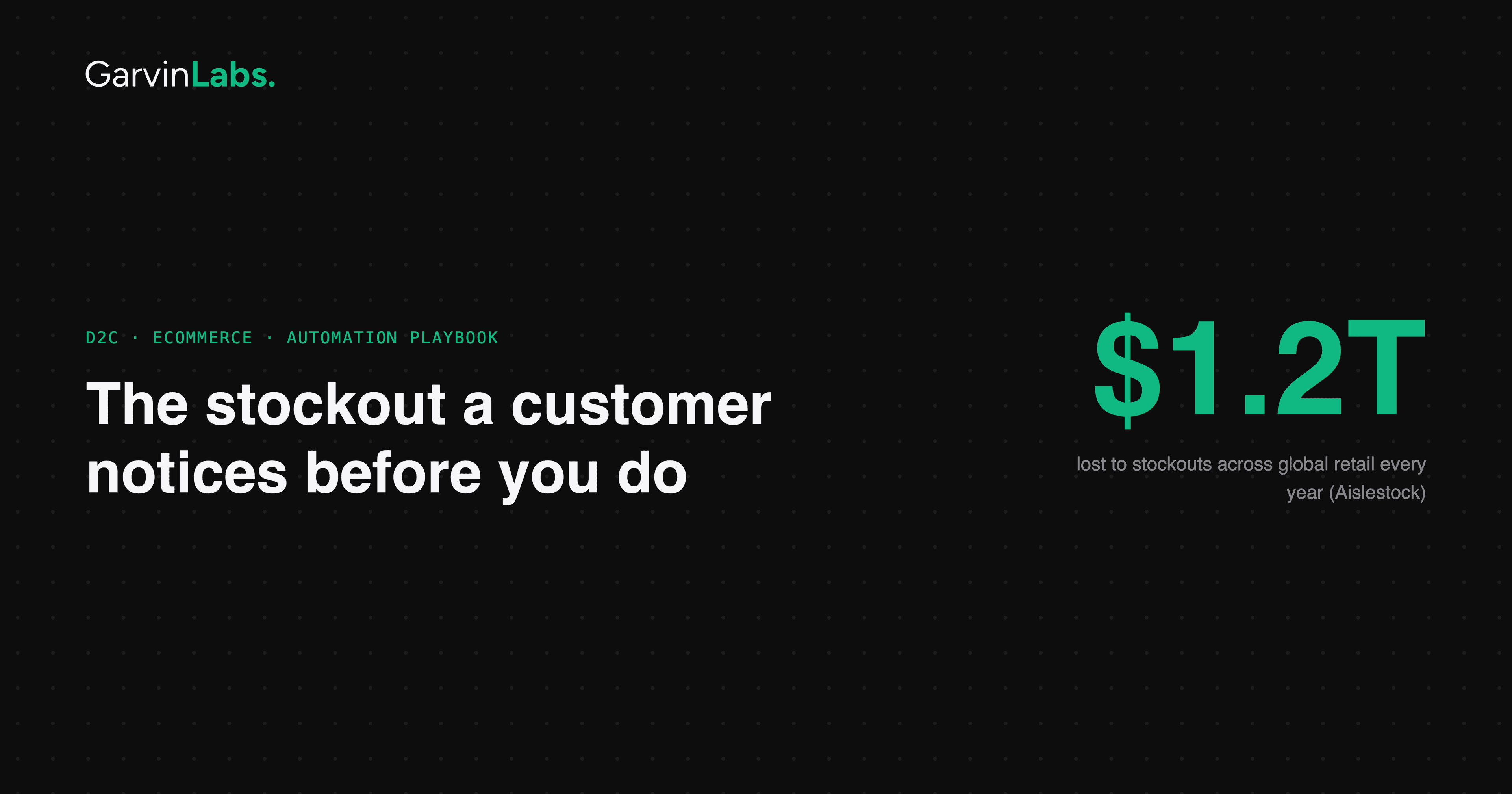
D2C · Ecommerce · Automation Playbook
The stockout a customer notices before you do
Periodic inventory checks catch a stockout after it's already cost you a customer. What continuous, per-SKU threshold monitoring with a parallel expiry clock looks like.
Read →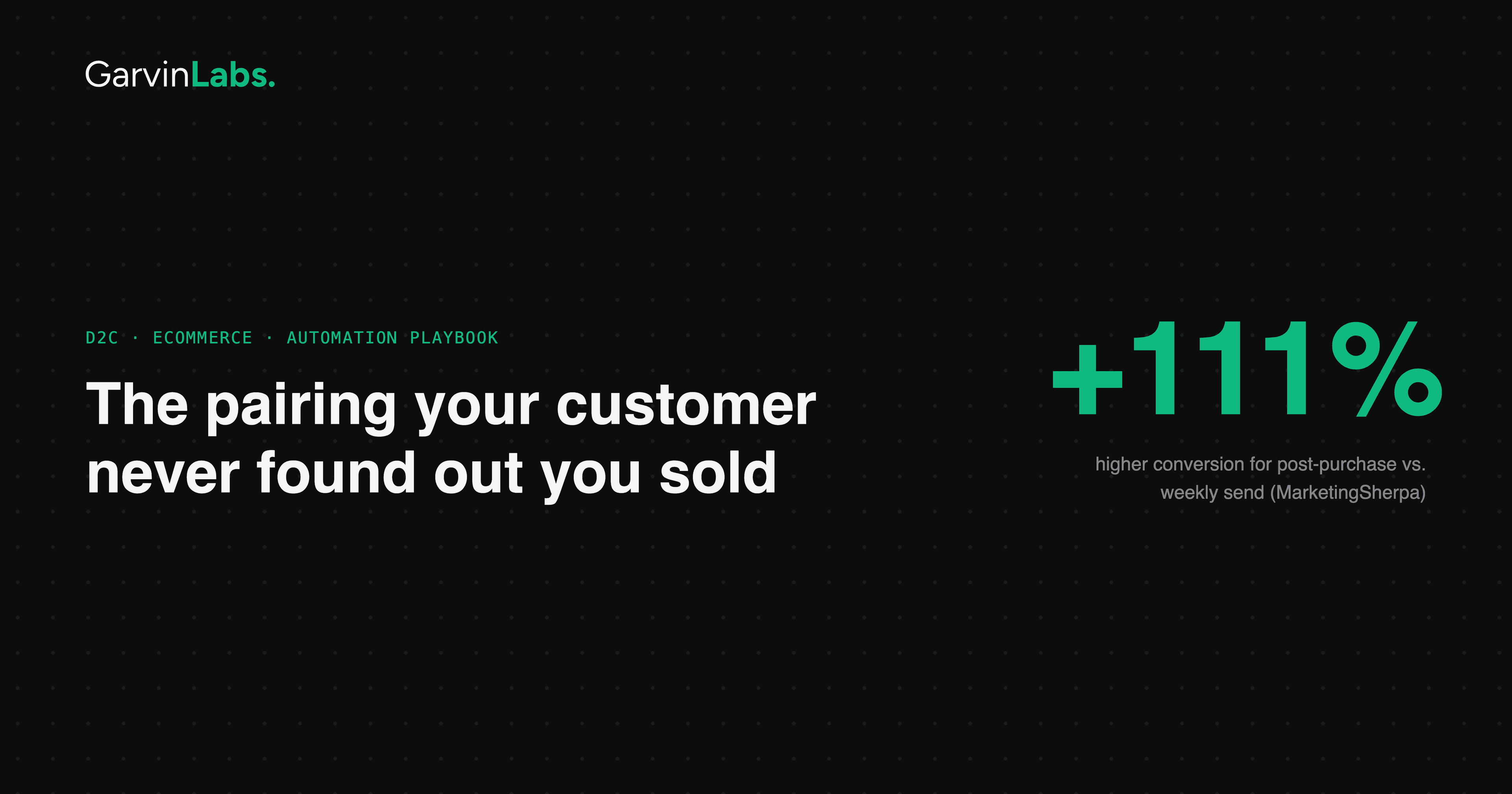
D2C · Ecommerce · Automation Playbook
The pairing your customer never found out you sold
A curated pairing table matched to the order that just shipped beats generic 'you might also like' email, because it's tied to what the customer actually bought.
Read →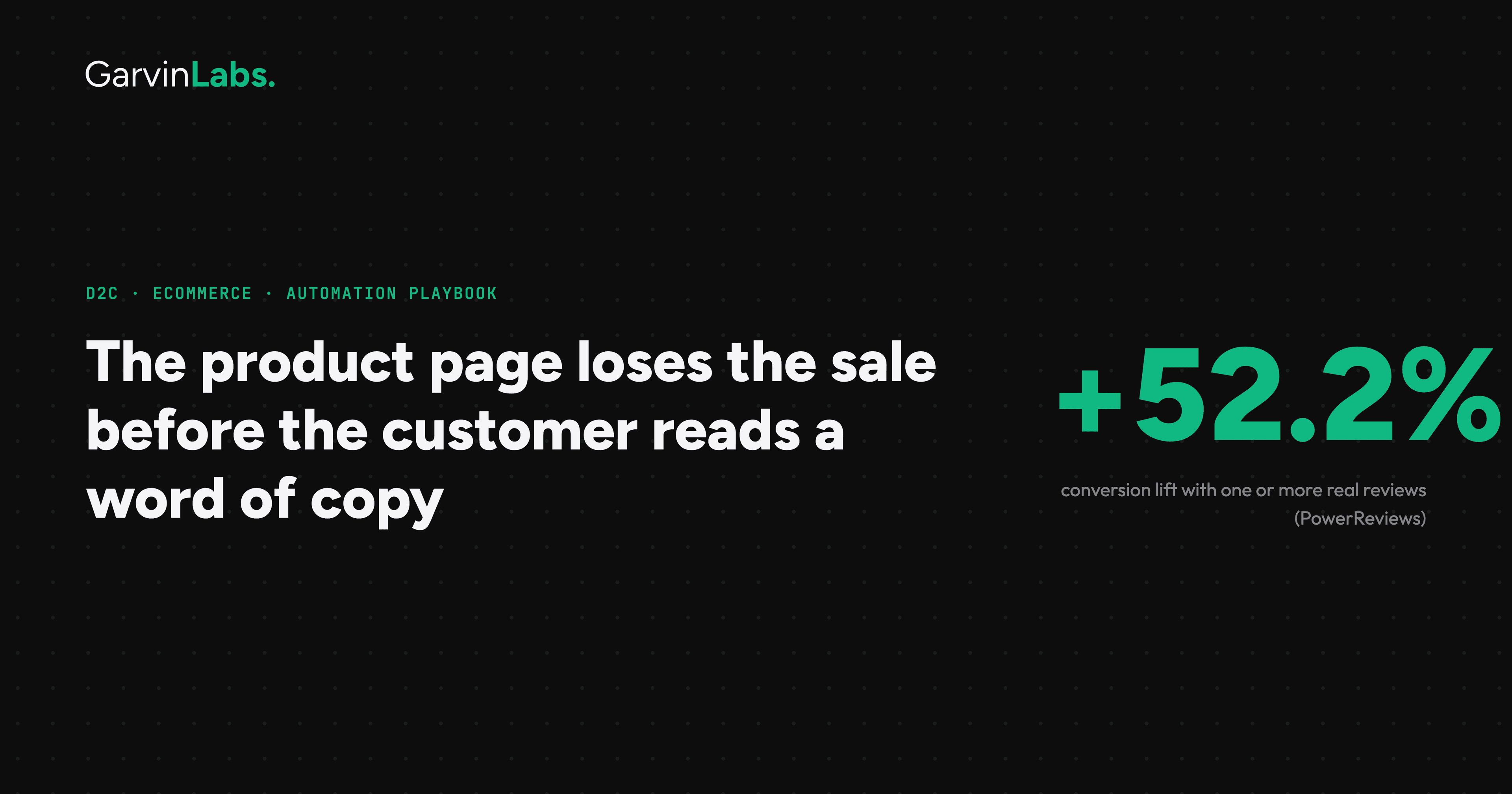
D2C · Ecommerce · Automation Playbook
The product page loses the sale before the customer reads a word of copy
A product page converts 52.2% better once it has even one real review. What a delivery-triggered, category-aware review and UGC request sequence looks like.
Read →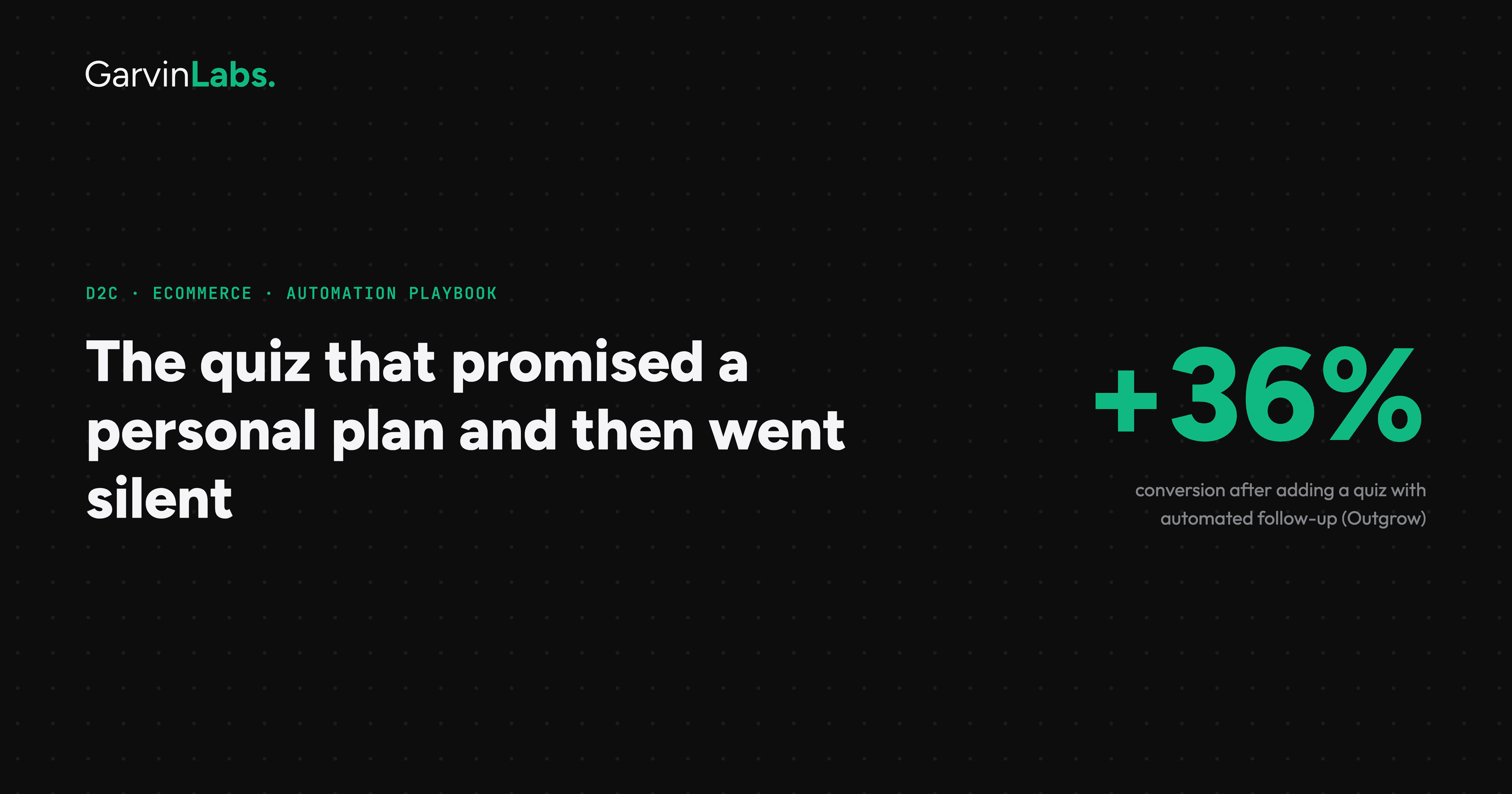
D2C · Ecommerce · Automation Playbook
The quiz that promised a personal plan and then went silent
A quiz results page promises a personal plan, then the follow-up email is the same generic send everyone gets. What a completion-triggered, answer-matched system looks like.
Read →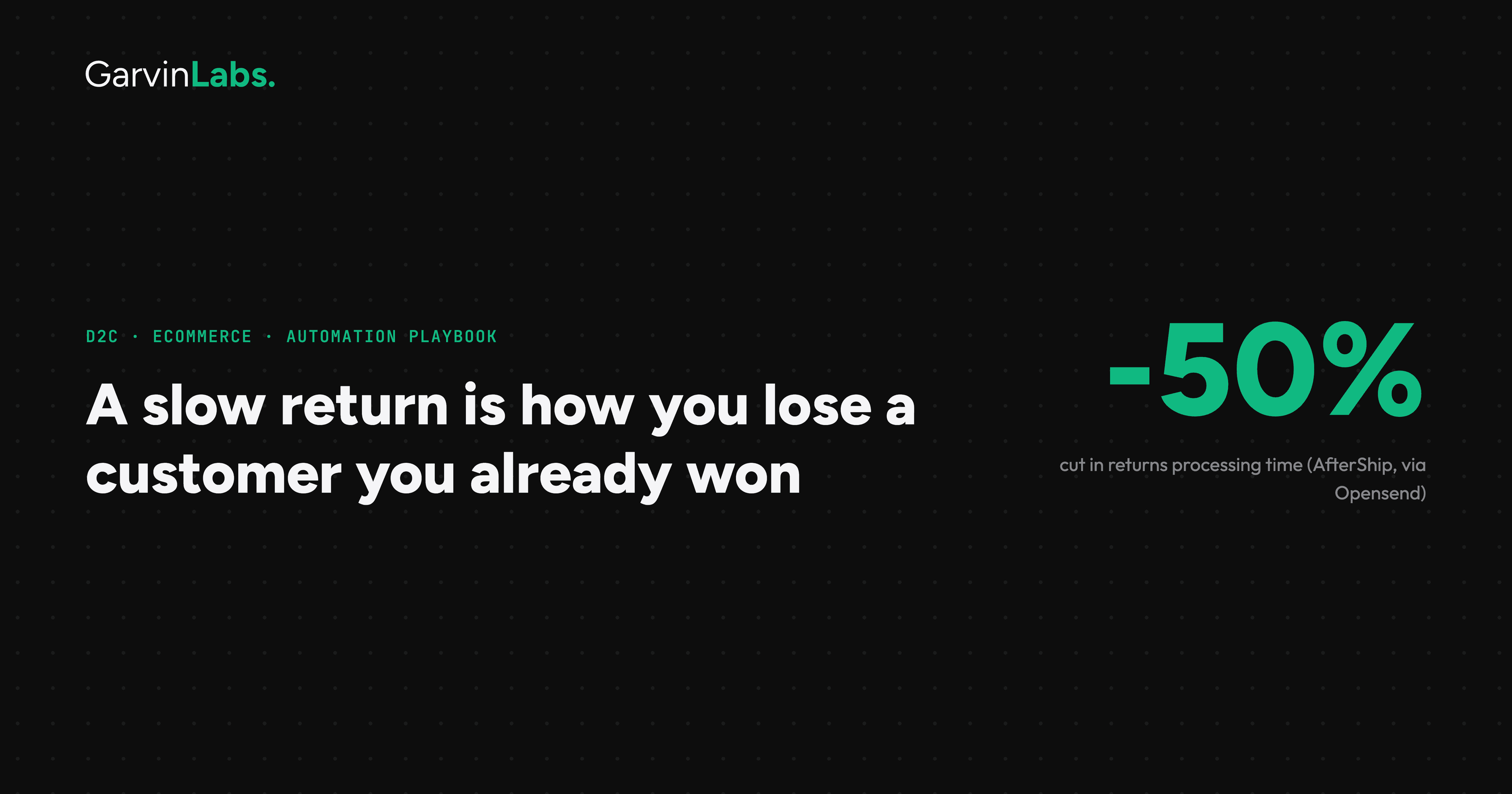
D2C · Ecommerce · Automation Playbook
A slow return is how you lose a customer you already won
"Our returns process was all manual," says a footwear brand's ops director, describing phone-and-spreadsheet chaos. What a policy-check-plus-label automation looks like.
Read →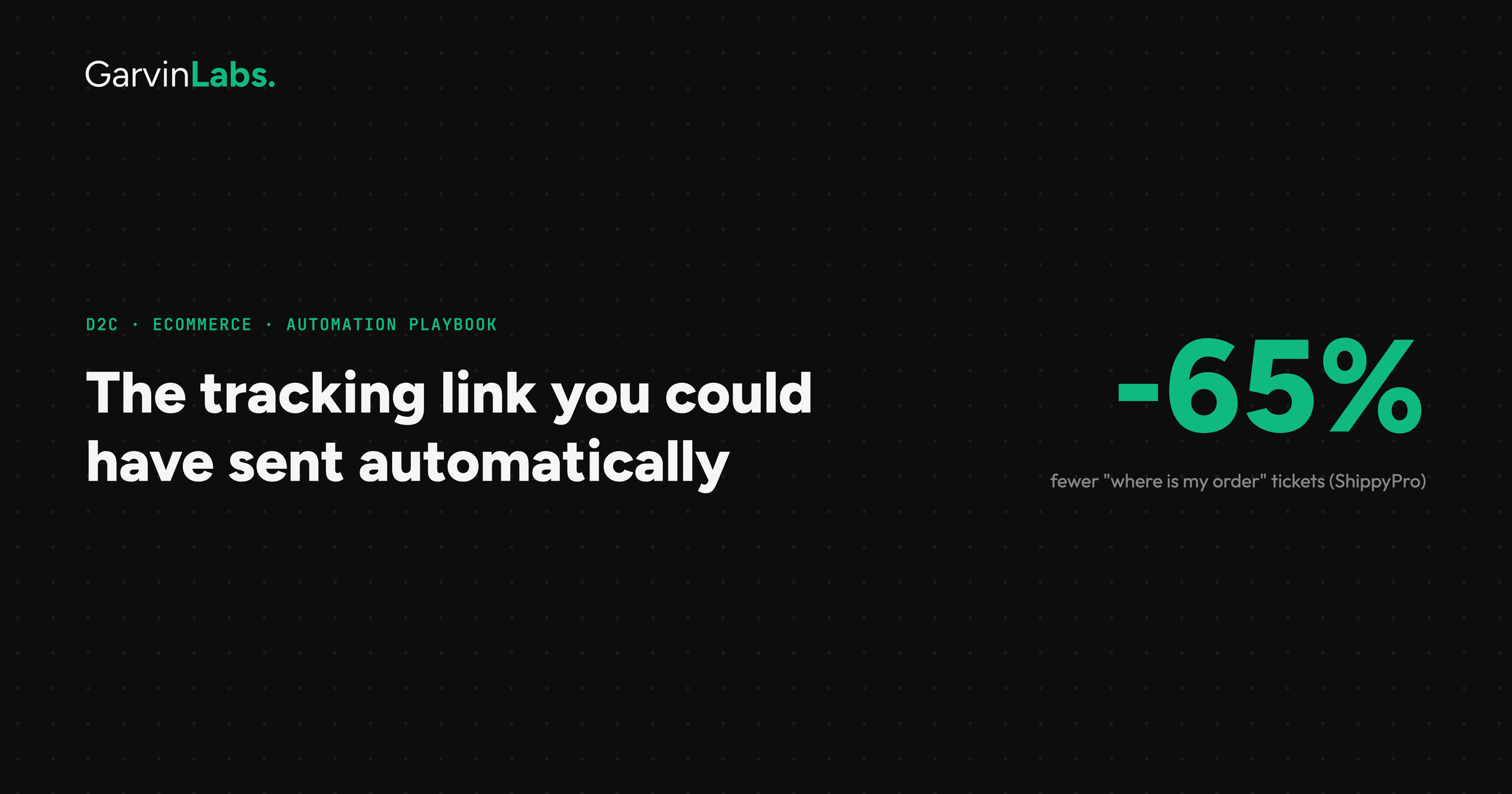
D2C · Ecommerce · Automation Playbook
The tracking link you could have sent automatically
WISMO tickets come from silence, not slow shipping: a webhook-triggered system that captures the tracking number at label creation and flags stalls before the customer notices.
Read →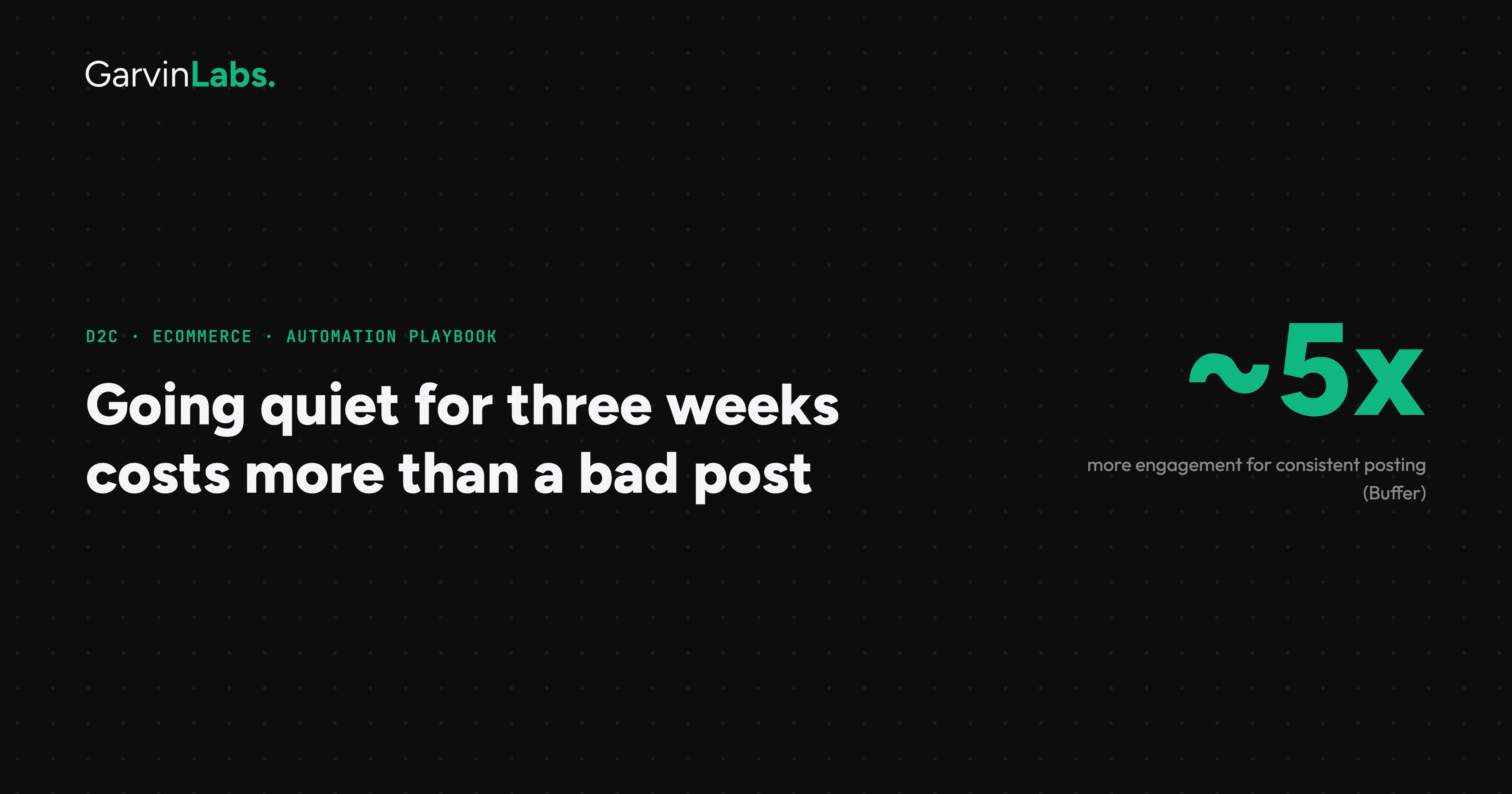
D2C · Ecommerce · Automation Playbook
Going quiet for three weeks costs more than a bad post
Content gets made in bursts because it's rarely anyone's actual job, and the queue empties the moment something else demands attention. What a drafting-plus-review pipeline looks like.
Read →
D2C · Ecommerce · Automation Playbook
A surprise box is only fun until it isn't your taste
Subscription-box churn from a mismatched month never generates a ticket, so it never generates a signal either. What a charge-date-anchored teaser-and-skip cadence looks like.
Read →
D2C · Ecommerce · Automation Playbook
The subscription that silently ends because a card expired
75% of customers who lose a subscription to a failed payment never sign back up, per Butter Payments founder Vijay Menon. What a pre-emptive recovery automation looks like.
Read →
D2C · Ecommerce · Automation Playbook
Your best customers can tell when you haven't noticed them
Most brands have no system for knowing who their best customers are, just a hunch and a stale spreadsheet. What a threshold-triggered recognition automation looks like.
Read →
D2C · Ecommerce · Automation Playbook
The newsletter that promised weekly and delivered quarterly
An inconsistent newsletter trains subscribers to stop opening it entirely. What a content-source-library-plus-review pipeline for wellness brands looks like.
Read →