Most modernization conversations start with the tool: which AI copilot, which automation platform, which ERP module. That skips the step that determines whether any of it works: knowing, in verifiable detail, how the work happens right now. Skip it, and you're not modernizing a process. You're automating a guess, faster.
The industry in this case study is manufacturing. The method isn't industry-specific: map the real process, name an owner for every step, measure ideal against actual, sequence the fixes by impact before touching a tool. That's what we run on every engagement, D2C or otherwise, and this is what it looked like on one of them.
Client and location names below are anonymized ("Meridian Engineering", "Plant A", "Plant B"). Every process, number, and finding is real.
The situation
- Structural steel fabrication, two plants, recurring B2B customer base built over years
- Director's complaint: orders taking longer than they should, and a few long-standing customers had started sending their own QC inspectors instead of trusting the internal sign-off
- Nobody in the business could say where, specifically, the time was going
What they asked for: help figuring out why orders were slow.
What we delivered: a diagnosis of the business, a root cause for the delay, a sequenced roadmap, and a separate set of AI opportunities scoped and ready to build.
How we approached it
- Walked and documented all 26 steps of the order-to-cash cycle, from first RFP to final payment, based on what actually happens on the floor
- Built the org chart and a responsibility matrix so every step had a named owner
- Spent 48 hours in direct interviews with the Director and management to get every operational complaint on record, not guessed at
- Measured ideal vs. actual duration per process, from real job records
That's diagnosis, not documentation. It's what let us trace 30 to 40 lost days to three specific, fixable causes instead of guessing, and it's the same sequence we run whether the business underneath runs an ERP, a spreadsheet, or a whiteboard: understand first, prescribe second.
What we found
The gap between ideal and actual cycle time traced back to three failures, none of them about the workers or the equipment:
- No real-time job tracking: a job falling behind stayed invisible until it was already late
- No documentation at point of work: paperwork got filled in retroactively at dispatch, holding up shipments that were physically ready to go
- No minimum-stock enforcement: every job started with a real chance of an emergency material run before a single cut was made
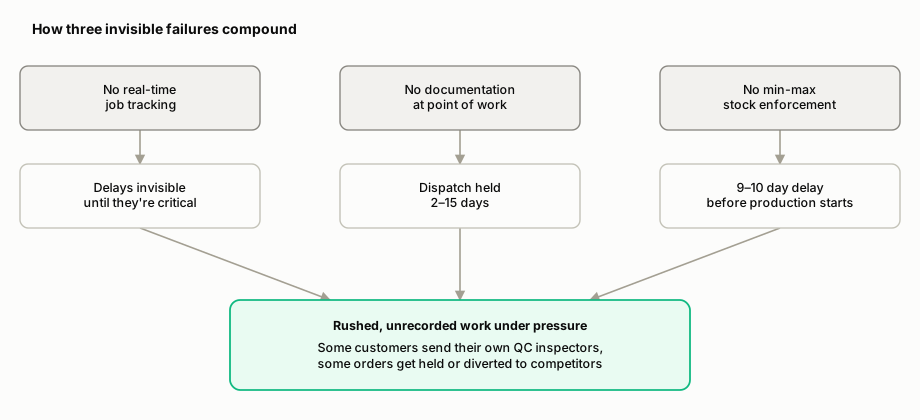
It was invisible slack compounding into a visible, expensive symptom three steps removed from its real cause, cosmetic rather than structural or a safety issue, which is why nobody inside the business had been able to name it.
The numbers
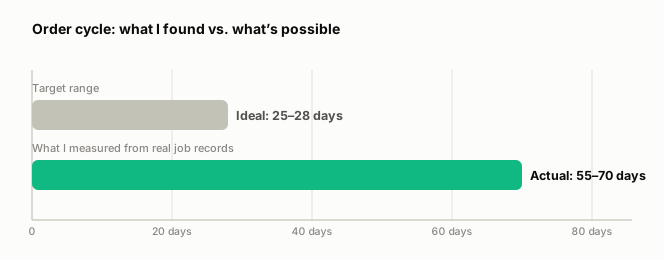
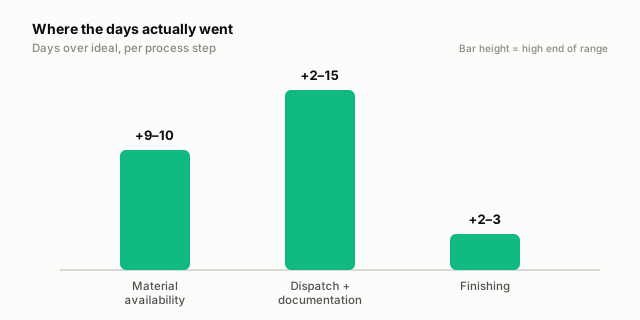
Fixing just the top two, on paper, recovers an estimated 12 to 25 days from the cycle. Not every finding deserves the same urgency, and naming which ones do is the point of running the diagnostic at all.
What we recommended
- Daily job tracking matrix and an outsource follow-up log first, visibility with no new tools required
- Documentation gates, plus standard email templates for customer communication
- Minimum-stock enforcement and a finishing-capacity review
- A span-of-control restructure last, since one plant head was carrying roughly 45 direct reports and no tracking system survives that
AI solutions
Build the manual process first. The data comes from discipline, not from technology. Once that discipline is in place to feed them real data, four automations are scoped and ready to build, each 2 to 6 hours of build time on tools the business already had:
- Live job-status dashboard
- Payment-clock tracker with automatic escalation
- Material reorder alert
- Templated email automation for customer communication
What this doesn't claim
This covers the diagnostic and the roadmap it produced, not what happened after. A process map and a prioritized plan are a real deliverable on their own, and we'd rather say exactly that than stretch it into a bigger claim.