Where manufacturing ops actually break
The instinct is to blame the floor: not enough people, not enough machines, not enough speed. In the one diagnostic run so far, none of the three root causes were about the workers or the equipment. They were about visibility: nobody could see a job falling behind until it was already late, paperwork got filled in retroactively instead of at the point of work, and stock ran out because nothing enforced a minimum.
One diagnostic: a structural steel manufacturer
Two plants, a recurring B2B customer base, and a director's complaint that orders were taking longer than they should, with long-standing customers starting to send their own QC inspectors instead of trusting the internal sign-off. Mapping all 26 steps of the order-to-cash cycle, building the org chart and a responsibility matrix, and measuring ideal against actual duration per step traced the gap to three specific causes instead of a guess.
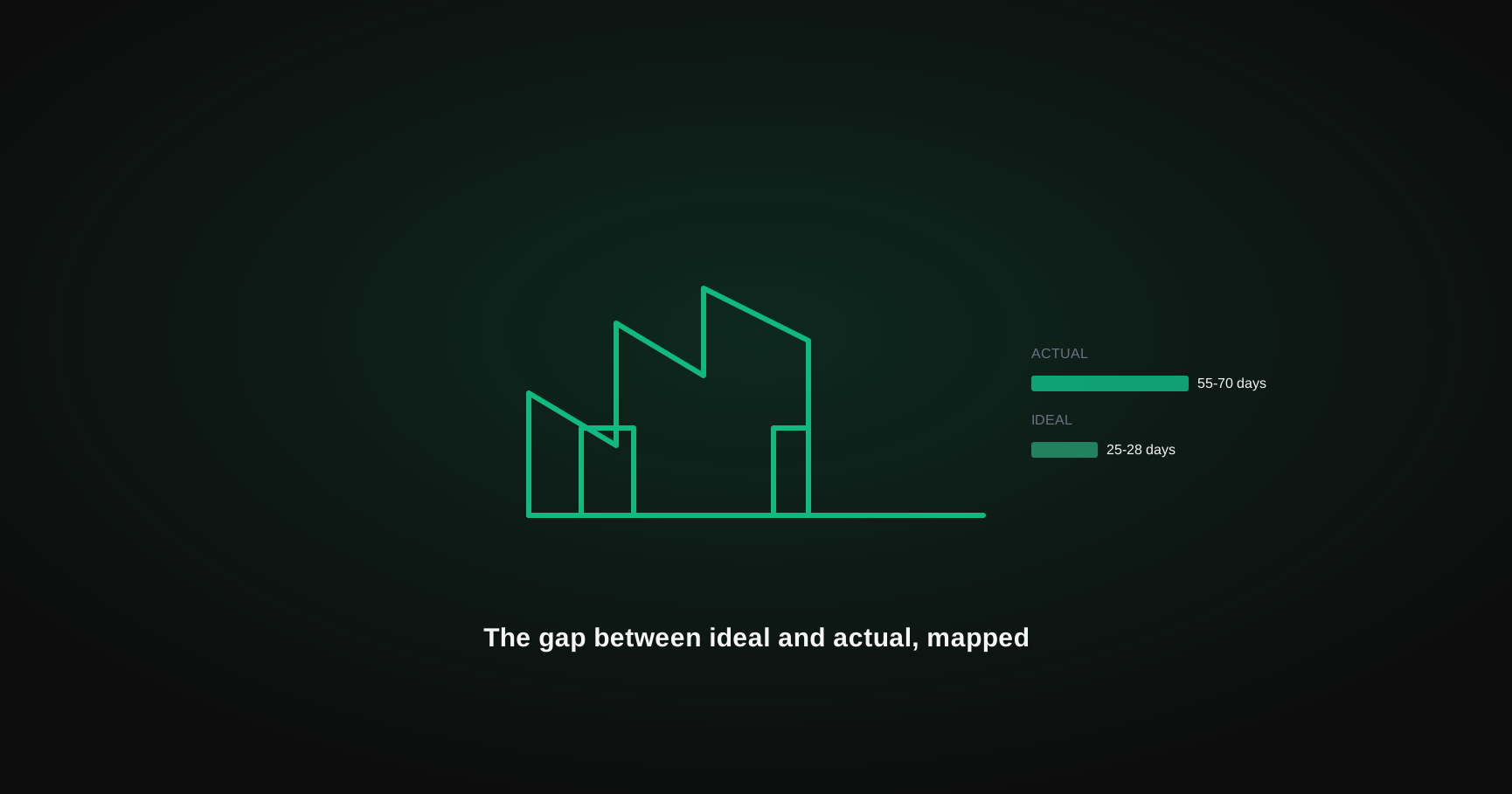
The numbers: 55 to 70 days actual cycle time against an ideal of 25 to 28. 9 to 10 days lost before production even starts, on material shortage alone. 2 to 15 days lost at dispatch, waiting on documentation that should have been ready already. Fixing the top two issues was estimated to recover 12 to 25 days from the cycle.
What gets scoped after the diagnostic
The manual process comes first. Once daily job tracking and documentation discipline are in place to generate real data, four automations were scoped as a follow-on, each estimated at 2 to 6 hours of build time on tools the business already had: a live job-status dashboard, a payment-clock tracker with automatic escalation, a material reorder alert, and templated email automation for customer communication.
What this doesn't claim
This page describes one diagnostic engagement and the roadmap it produced. It is not a track record of delivered manufacturing automations, and whether the four scoped builds were actually implemented hasn't been confirmed. A process map and a prioritized plan are a real deliverable on their own; this page says exactly that and nothing more. Full write-up: the Meridian Engineering case study.