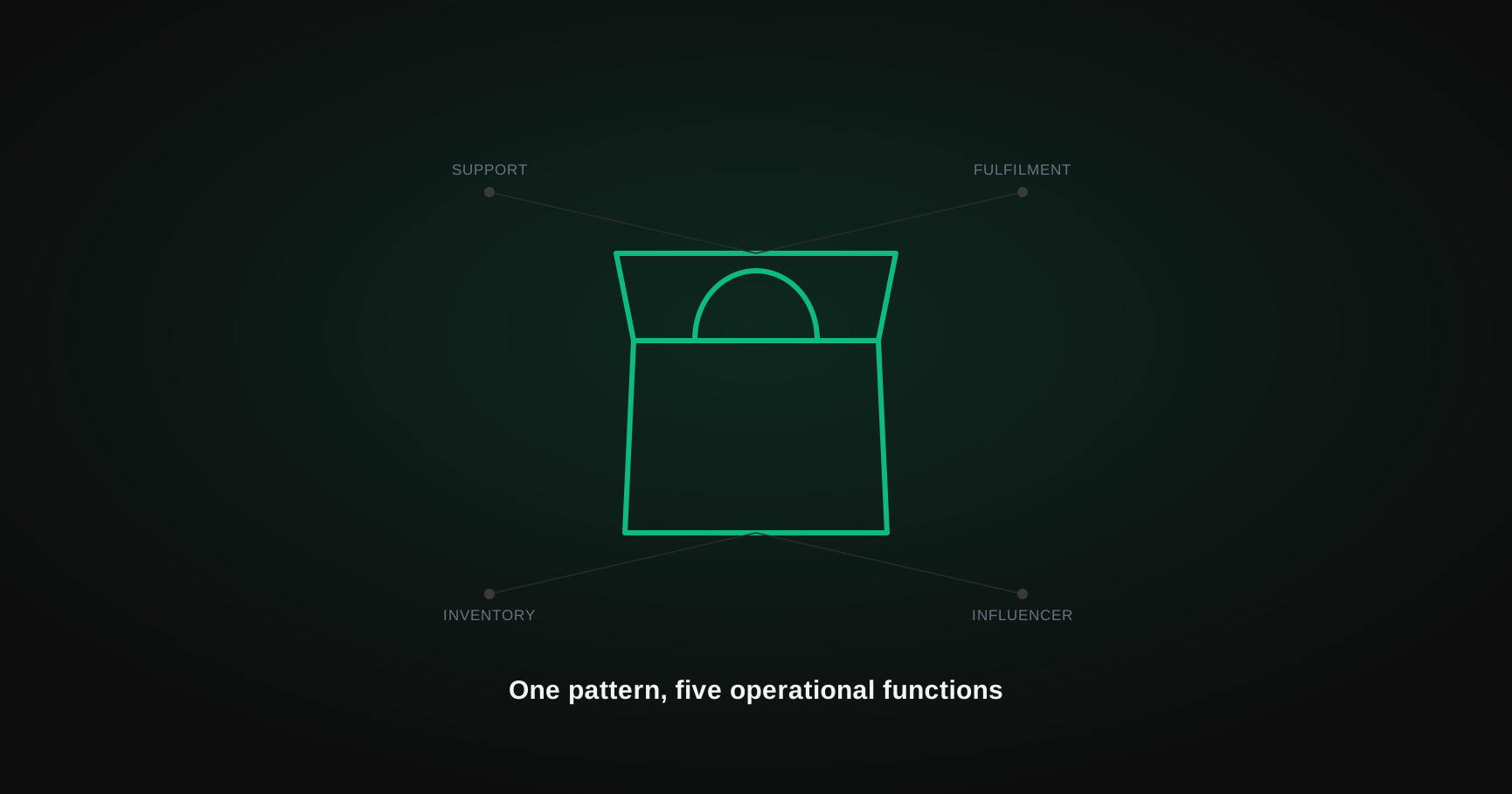
The pattern across retail ops
A D2C or retail brand growing past a few hundred thousand dollars in revenue hits the same wall repeatedly: the founder or a small team is still doing, by hand, work that used to be manageable at a smaller scale and no longer is. Support tickets. Daily ops reports. Fulfilment coordination over WhatsApp. Influencer payouts tracked on a spreadsheet. Reorder decisions made from memory.
None of these are separate problems. They're the same problem showing up in different departments: manual work that scaled past the point a person can carry it reliably.
Where it starts
Every build here starts the same way regardless of which function it touches: walk the process as it actually runs, not as the documentation describes it, find where the judgment calls happen, and scope the automation around that. Skipping this step doesn't save time. It just means automating a guess, faster.
One example: support triage
ThreadWave is the clearest built example so far. It reads inbound support tickets, classifies them, and drafts replies for the low-risk, well-understood ones, order status, return policy, that kind of thing. Anything ambiguous or high-stakes gets escalated to a person with the draft already attached. Result: 61% auto-resolution within 30 days of going live, and a 14-day build timeline from first mapping session to production.
Beyond support
The same method scopes builds for ops reporting, fulfilment exception handling, influencer/affiliate tracking, and inventory alerting, whichever pain area is actually confirmed in conversation with the founder. Vertical-specific breakdowns exist for beauty and cosmetics, fashion and apparel, and food and beverage brands, each covering the automations that tend to matter most for that category.
What this isn't
There's no fixed retail automation package. The starting point is always the specific manual process a founder is personally stuck doing, wherever that turns out to be. For India-based founders specifically, see AI modernization for D2C brands based in India.